
How Modern Car Wash Systems Protect Your Vehicle’s Finish
For many car owners, washing the car is about more than just the surface appearance. The main goal is to conserve the paint and avoid any irreversible damage as long as possible. However, it’s also common to have reservations about passing your car through a car wash. You may be concerned about swirl marks or having a clear coat get dull.
Modern car wash technology has undergone major changes. The professional wash systems of today are more efficient and have less of a chance of causing abrasion than older machines. With the use of better soaps, water management, and more advanced materials, the focus is on preserving the vehicle’s finish while giving consistent results.
Why the Finish Needs Protection
A vehicle’s paint system has more layers than it seems. The majority of vehicles have several layers: primer, base coat, and a protective gloss clear coat. The clear coat is strong, yet not invincible. It contends with a few common hazards.
- Road grit and dust.
- Bug splatter and bird droppings.
- UV radiation from sunlight.
A good wash, apart from just making the surface shiny, gets rid of contaminants before they manage to penetrate the surface and do lasting harm.
Read: Looking for Cheap Used Cars Near Me? You’re in Luck
The Shift From Harsh Scrubbing to Chemistry and Lubrication
The most significant advancement in contemporary car wash systems is their reliance on cleaning chemistry and lubrication rather than aggressive scrubbing. Quality presoak detergents first loosen and encapsulate the grime, traffic film, and oily residues before any friction steps take place.
This matters because rubbing a dirty surface is where many swirls and micro-marring originate. Modern systems often use multi-step applications, such as:
- Pre-soak to break down stubborn organic debris.
- High-foaming detergents that lift and suspend soil.
- Rinse agents and drying aids that reduce water spotting.
High-pressure Touchless Options
Touchless and hybrid car wash systems have become more common because they can significantly reduce paint contact. Touchless washes are designed to clean using high-pressure water and detergents. No brushes or cloths touch the surface, removing dirt in a gentle yet effective manner.
Heavy mud or thick road film can require extra cleaning power. This is why many modern washes are hybrid systems, combining strong presoak chemistry and high-pressure rinses with limited, gentle contact steps that are designed to be paint-safe.
Softer Wash Materials
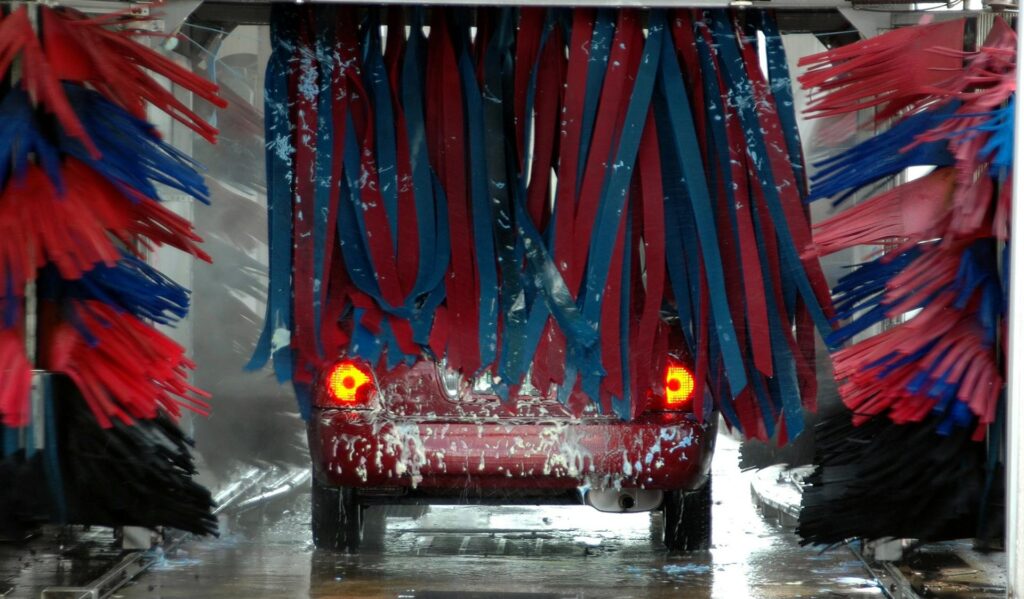
When a wash does involve contact, the materials used in brushes make a big difference. Older style brushes and poorly maintained equipment can trap dirt and drag it across paint. Modern facilities often use advanced media to reduce scratching risk, such as the following.
- Closed-cell foam or soft cloth strips for safer contact.
- Contoured or controlled-pressure systems that avoid harsh scrubbing.
- Frequent rinse cycles within the wash tunnel to flush away grit.
Water Quality Systems to Reduce Spotting
Paint protection isn’t only about scratches. Hard water minerals can leave spots that bake onto the surface, especially in hot, sunny climates. Many professional washes now invest in water treatment steps such as:
- Reducing mineral content through water softening.
- Final rinse using reverse osmosis water or spot-free rinse.
- The use of the right drying systems so there are fewer left over droplets.
This is a major advantage over typical home washes, where tap water minerals can leave visible spotting and contribute to surface dullness over time.
Modern Drying Technology Prevents Wipe Scratches
A common source of fine scratching is drying, especially when a vehicle is hand-dried quickly with towels that may not be perfectly clean. Modern washing reduces this risk in several ways.
- High-velocity dryers that remove water without touching paint.
- Drying agents that encourage water to sheet off the surface.
- Better drip management around mirrors, trim, and rooflines.
- Less wiping, which means fewer chances for micro-marring.
The Importance of Maintenance
Even the most sophisticated automotive wash facility requires constant upkeep. This is the reason that the facilities are careful about maintenance and monitor everything from chemical delivery calibration to keeping the water systems operating as intended and replacing wash media promptly.
Tips For Choosing a Finish-Friendly Wash
While modern technology has made regular car washing a lot more efficient, that doesn’t mean all washes are equal. If protecting your finish is a priority, follow these guidelines.
- Pick a wash that looks well-maintained.
- If you are worried about hairline scratches, then a touchless or hybrid wash is the best choice.
- If you’ve been off-roading or driving in heavy mud, choose a washing operation that includes strong presoak or rinse steps.
- Online reviews can help you identify great and not so great businesses.
Keeping Your Car Clean is No Longer a Chore
Innovations in the cleaning chemistry, friction control, and water quality, along with touchless and hybrid methods, have enabled a reduction in the risks that once gave car washes a bad reputation. Suppliers of vehicle wash systems and car wash parts also play a big role in helping wash operators maintain consistent performance and safe, reliable cleaning. When a facility is well run and uses modern processes, car owners have an easy way to keep their vehicles clean and shiny.