
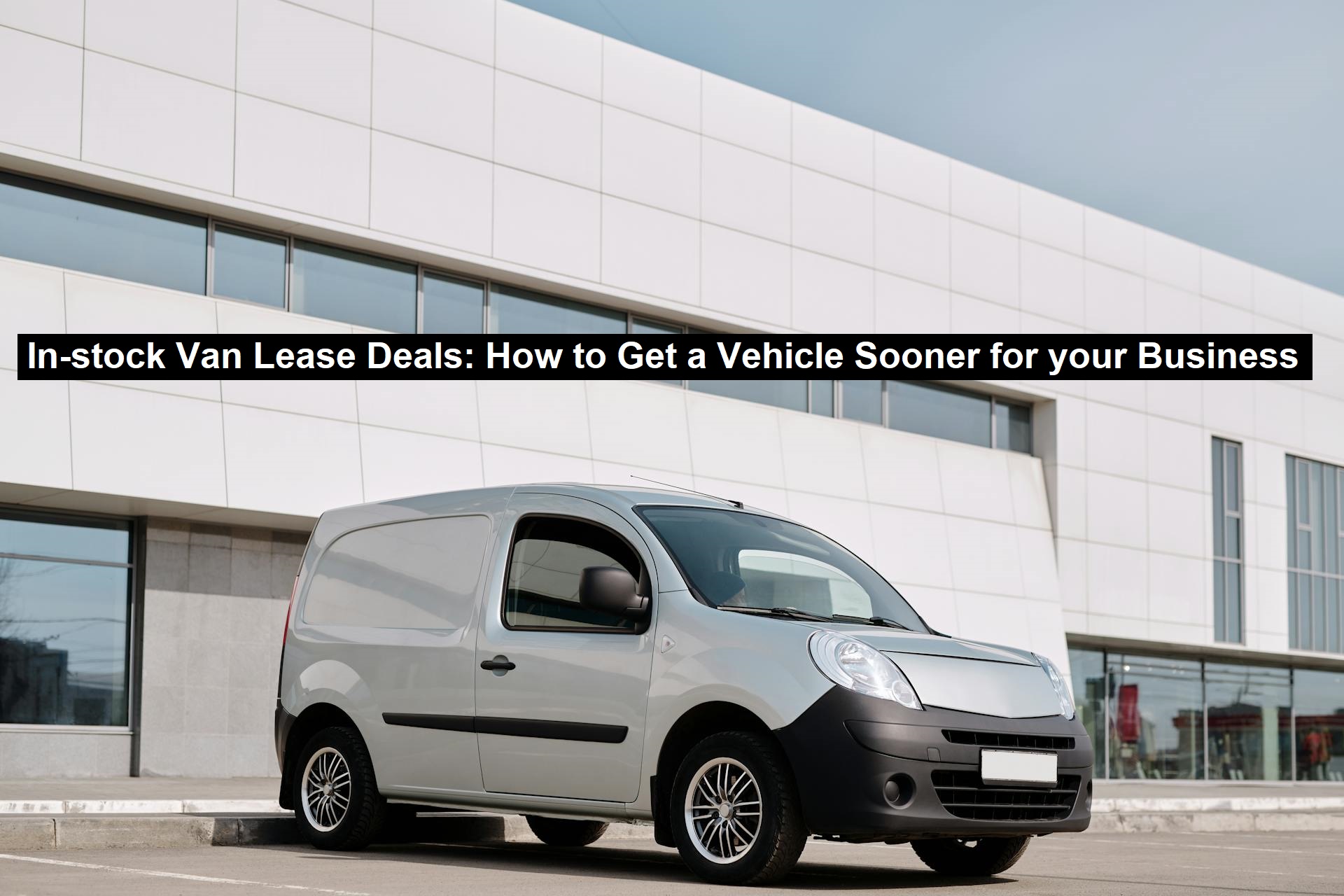
In-stock Van Lease Deals: How to Get a Vehicle Sooner for your Business
When your business depends on a van, waiting months for a vehicle can quickly become a problem. You may have jobs booked in, deliveries to make, tools to carry or staff who need to be on the road. If your current van is no longer reliable, or you are taking on more work, speed matters.
That is where in-stock van lease deals can help. Instead of waiting for a factory order, you can look at vans that are already available or due for quicker delivery. For many UK businesses, this can be a practical way to keep operations moving without tying up a large amount of capital in buying a van outright.
When comparing First Vehicle Finance van lease deals, you should still look carefully at the full agreement, not just how quickly the vehicle can arrive. The right van needs to suit your work, your mileage, your monthly budget and the way your business uses vehicles every day.
The UK van market remains important for businesses of all sizes. SMMT reported that the new light commercial vehicle market returned to growth in April 2026, with 21,716 vans, pickups and 4x4s registered, up 6.8% compared with April 2025. Large vans drove much of that growth, with 15,561 registrations and a 71.7% share of new LCV registrations during the month.
What does “in-stock” mean when leasing a van?
An in-stock van is usually a vehicle that is already built, available through a dealer or funder network, or due to arrive much sooner than a factory-order vehicle. This can make the process quicker than choosing a van that has to be built to a specific order.
In-stock does not always mean the van is sitting nearby ready to collect tomorrow. It may still need transport, preparation, finance approval, paperwork and delivery arrangements. However, it can often be quicker than waiting for a new factory build, especially if you are flexible on colour, trim or specification.
For a business, that flexibility can be useful. If your priority is getting a suitable van on the road sooner, choosing from available stock can save time and reduce disruption.
Why speed matters for business van leasing
A van is not just transport. For many businesses, it is part of the service you sell. If you are a tradesperson, courier, mobile engineer, cleaning company, catering supplier or delivery business, a delay can affect your ability to earn.
A reliable van can help you:
- Keep up with customer bookings
- Take on more work
- Replace an ageing vehicle before it becomes a bigger cost
- Reduce downtime caused by repairs
- Support a new employee or team
- Present a more professional image to customers
If your current van is costing too much in repairs, an in-stock lease vehicle may help you move into something newer without waiting too long. It can also give you fixed monthly rentals, which may make budgeting easier than dealing with unpredictable repair bills.
Check the van still fits your business needs
Speed is useful, but it should not be the only reason you choose a van. A vehicle that arrives quickly but does not suit your work can become frustrating very fast.
Before agreeing to a van lease, think about what you need every day. Payload is one of the most important points. If you carry heavy tools, stock, materials or equipment, make sure the van can legally and safely carry the load you need.
You should also consider load length, roof height, side loading doors, rear door access, seating, towing requirements, fuel type and parking space. A small van may be easier to park and cheaper to run, but it may not work if you regularly carry bulky equipment. A large van may give you more room, but it may cost more to lease, insure and fuel.
If you work in towns or cities, also think about clean air zones, parking restrictions and low-emission rules. A van that fits your business today should also make sense for the areas you regularly serve.
Read: How Modern Car Wash Systems Protect Your Vehicle’s Finish
Understand the monthly cost properly
When comparing in-stock van lease deals, the monthly rental is important, but it is not the only cost to review. You should look at the full structure of the agreement.
This includes the initial rental, monthly rental, contract length, mileage allowance, maintenance, delivery, VAT and any fees. For business van leasing, prices are often shown excluding VAT, so make sure you know whether the figures you are comparing are plus VAT or including VAT.
Your initial rental is normally paid once the van is delivered and the agreement is live. Choosing a higher initial rental may reduce the monthly rental, but it also means paying more upfront. For a small business, cash flow matters, so it is worth choosing a structure that feels comfortable.
You should also think about insurance, fuel or charging costs, servicing, tyres and downtime. A slightly higher monthly rental may still be worthwhile if the van is better suited to your work and helps you avoid delays or operational problems.
Choose a realistic mileage allowance
Mileage is one of the biggest things to get right. If you underestimate your annual mileage, you may face excess mileage charges at the end of the agreement. If you overestimate, you may pay more each month than you need to.
Business mileage can add up quickly. You may be travelling between job sites, visiting suppliers, delivering goods, attending emergency callouts or covering a wider area than expected. Look at your current mileage records if you have them. If not, estimate your weekly mileage and add a sensible buffer.
Do not base the mileage allowance on your quietest months. Think about busy periods, seasonal demand and growth plans. If you are taking on more work, your van may be used more than your previous vehicle.
Should you consider an electric van?
Electric vans are becoming more visible in the UK market, but they are not right for every business yet. SMMT said battery electric van registrations rose by 44.7% in April 2026, giving them a market share of just over 11% for the month. Year-to-date market share was 9.4%, which shows growth, but also that diesel remains the dominant choice for many operators.
An electric van may suit you if you cover predictable local routes, have access to overnight charging and want to reduce tailpipe emissions. It may be especially useful for urban work, regular delivery rounds or businesses with depot parking.
However, you need to check the real-world range, payload, charging time and access to charging points. A van that looks good on paper may not be right if you regularly carry heavy loads or travel long distances at short notice.
For some businesses, diesel may still be the most practical choice. For others, an electric van may offer a useful step towards lower-emission operations. The key is to match the van to the job, not just the trend.
Business Contract Hire or Personal Contract Hire?
If the van is for your business, Business Contract Hire is often the route to consider. You agree to a contract term, mileage allowance and monthly rental, then return the van at the end of the agreement. This can help with budgeting and may avoid the need to buy a depreciating vehicle outright.
If you are leasing a van for private use, Personal Contract Hire may be more suitable. The structure is similar, but it is arranged for personal rather than business use.
You should always check which agreement type fits your circumstances. First Vehicle Finance Limited is a credit broker, not a lender. Finance is subject to status and lender criteria, and credit checks may affect your credit score.
Be ready with the right information
If you want to get an in-stock van sooner, it helps to be prepared. Delays can happen when information is missing, documents are incomplete or a decision takes too long.
Before applying, make sure you have the key details ready. This may include your preferred van size, expected mileage, contract term, budget, business details and whether you want maintenance included. If you are flexible on colour or trim, say so early, as this can increase the number of suitable in-stock vehicles.
You should also respond quickly to finance or order queries. Even when a van is available, it cannot move forward properly until approval, paperwork and delivery arrangements are in place.
Think about the end of the lease from the start
At the end of a van lease, the vehicle is returned. You do not own it at the end of a Business Contract Hire or Personal Contract Hire agreement.
This means you need to look after the van throughout the term. Charges may apply for excess mileage or damage outside fair wear and tear. For business vans, this is especially important because load areas, doors, bumpers and interiors can take a lot of use.
It may be worth using ply lining, seat covers, floor protection and sensible storage to reduce unnecessary damage. If you carry tools or materials, secure them properly so they do not damage the inside of the van.
How to get a van sooner without making the wrong choice
The best way to get a vehicle quickly is to be clear, realistic and flexible. Know what size van you need, what you can afford each month and how soon you need it. Then decide which details are essential and which ones you can compromise on.
You may need to be flexible on colour, trim or certain extras. However, you should not compromise on payload, mileage, contract affordability or the basic suitability of the van for your work.
An in-stock van lease can be a smart choice when you need a vehicle sooner, but it still needs to support your business properly. A quick decision should still be a good decision.
Find an in-stock van lease that works for your business
If your business needs a van quickly, an in-stock lease deal may help you avoid long waits and keep your work moving. The key is to compare availability, monthly cost, mileage, vehicle size and contract terms before you commit.
Whether you need a small van for local jobs, a large van for tools and materials, or an electric van for city-based work, take the time to find an agreement that fits your business.
To explore available van lease deals and find a suitable vehicle sooner, speak to a leasing specialist today and get your business moving with the right van for your workload, budget and timescale.